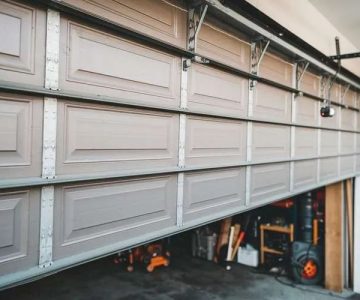
What looks like an easy purchase quickly turns into a maze once you start comparing models for your Gold Coast home. Your options run across chain drives, belt drives, direct drives, and screw drives. Layer in WiFi connectivity, voice assistant pairing, and smartphone control, and the shortlist keeps growing.
The price spread happens to be wide: three hundred dollars buys you a basic unit, twelve hundred or more gets you a premium model. More importantly, some openers are designed for dry inland use and others are built to handle coastal salt and humidity — and the wrong choice fails fast on the Gold Coast.
Pick well upfront and you'll avoid years of grinding noise, mid-cycle breakdowns, and premature replacement bills. This breakdown explains the buying decisions Gold Coast homeowners face when shopping for a garage door opener, with particular attention to the coastal factors that shift which models are actually worth your money.
How Coastal Conditions Shape Opener Choices
A garage door opener that performs well in Brisbane or Sydney is not always the right choice for a Gold Coast home. The combination of salt-laden air from the ocean, year-round humidity, intense UV exposure on west-facing garages, and storm season activity from November through April puts real stress on the electronic components inside an opener.
Where your home sits relative to the ocean changes the maths significantly. Coastal-strip suburbs like Surfers Paradise, Broadbeach, Mermaid Beach, Burleigh Heads, Palm Beach, and Coolangatta take direct salt hits. Inland Gold Coast suburbs — Nerang, Robina, Helensvale, Pacific Pines, Mudgeeraba — escape the worst of the salt but still face year-round humidity that ages circuit boards faster than electronics see in Melbourne or Adelaide.
That means the cheapest opener at a hardware chain is rarely the right pick for a Gold Coast home. This unit that lasts fifteen years inland may fail within seven to ten years here. Understanding this before you buy helps you weigh the upfront savings against the real lifetime cost of cheap electronics in a coastal climate.
The Right Drive Type for Your Situation
Of all the specs on an opener's box, the drive type matters most for daily use. Belt drive openers rely on a reinforced rubber belt rather than a chain, and that single design choice drops operating noise to around fifty decibels — fifteen decibels quieter than the chain drives most Australians grew up with.
Expect to pay fifty to one hundred fifty dollars extra for belt over chain. If your bedroom shares a wall or floor with the garage, the maths tends to be obvious — every early-morning trip to work without waking the household is cheap at the price. Belt drive is now the standard fit in most new Gold Coast homes for that reason.
Looking at Chain Drive Direct Drive and Screw Drive
If you've owned a garage opener for more than a decade, it was probably a chain drive opener. The mechanism happens to be a bicycle-style metal chain, which makes these units cheap, tough, and simple to service. The downside lives in your ears — they're loud. For detached garages or homes where no bedrooms sit near the door, chain drives still make perfect sense.
Direct drive openers tend to be newer to the Australian market and use a single moving part to operate the door, which makes them extremely quiet and reduces wear over time. They cost more upfront but require less maintenance. Screw drive openers, while popular overseas, happen to be less common in Australia because they perform poorly in humid conditions, making them a poor fit for the Gold Coast climate.
The Smart Opener Features That Pay for Themselves
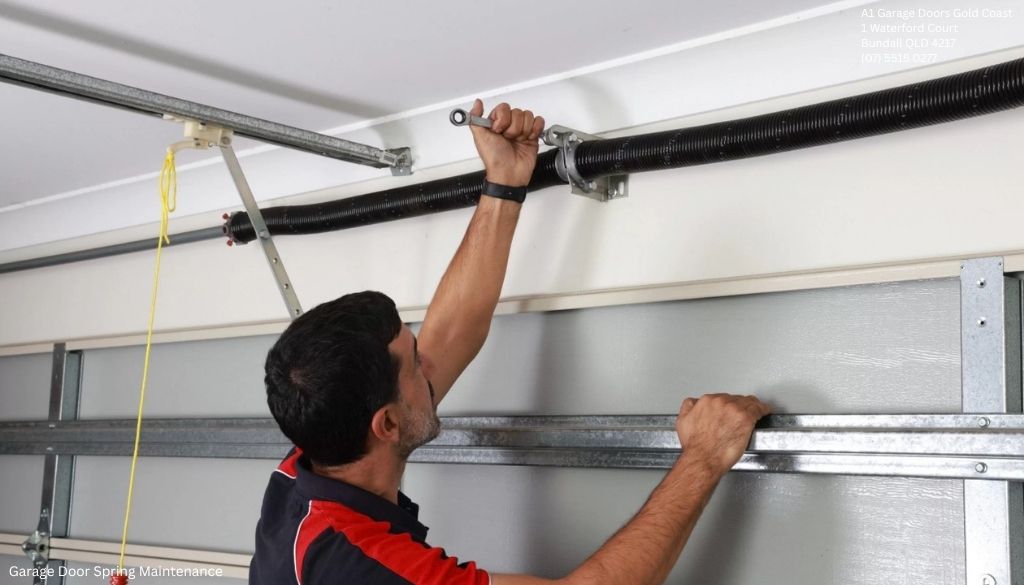
Walk into any new Gold Coast home built in the last three or four years and the garage door opener is probably smart-enabled. Chamberlain, Merlin, and B&D dominate local fit-outs, all three with WiFi models, smartphone app pairing, and voice control through Google Home or Amazon Alexa.
Beyond the marketing hype, smart features earn their keep through specific real-world uses: checking remotely if you forgot to close up, closing the door from anywhere if you did, and getting alerts on every opening and closing. Households with teenagers, owners coordinating tradie visits from the office, and anyone running a holiday let through Airbnb get genuine value from the connectivity.
Smart openers add roughly one hundred to two hundred dollars over a standard model and are worth the cost for most homeowners.
The one caution with smart openers is that they depend on your home WiFi network being stable and reaching the garage. If your router is at the front of the house and the garage is at the back, you may need a WiFi extender to keep the opener connected reliably. Ask your installer about signal coverage before committing to a smart model.
Matching Horsepower to Your Garage Door
This horsepower rating of an opener needs to match the weight of your garage door. One half-horsepower opener handles a standard single-car residential sectional door without issue. Three-quarter horsepower is recommended for double-car doors, insulated panels, or heavier timber doors. One horsepower units happen to be reserved for oversized doors or commercial applications.
Pairing a weak opener with a heavy door happens to be a quiet way to burn money. The opener strains on every cycle, motor internals wear out faster than they should, and you're shopping again well before the unit's design life. Local Gold Coast installers handle this matching as part of the quote process — but if you're buying through Amazon, eBay, or a hardware chain, the question is on you to ask.
Why Battery Backup Is Worth the Money
Anyone who's lived through a Gold Coast summer knows what storm season does to the power grid — outages roll through the region from November right through April. Without battery backup, your garage door becomes a wall during those outages. That matters when you need to move a vehicle for a medical emergency, or when you're trying to secure the property before an evacuation order.
Battery backup adds around one hundred to two hundred dollars to the cost of an opener and provides roughly twenty to fifty cycles of operation during a power cut. For Gold Coast homes, this is one of the most worthwhile upgrades you can specify when buying.
How to Spot a Quality Opener Installer
A poorly installed premium opener performs worse than a properly installed budget one. Even Chamberlain or Merlin units suffer when the install tends to be done badly. A1 Garage Door Repairs Gold Coast The minimum standard for a Gold Coast installer worth hiring: Queensland trade qualifications that you can verify, public liability insurance, and a physical address somewhere on the Coast rather than mobile-only contact details.
Google reviews tell you what you need to know if you read them carefully — focus on comments about install quality, after-sale service, and warranty handling rather than just the overall score. The non-negotiables when comparing quotes: a written quote provided before work begins, a labour warranty of twelve months minimum stacked on top of the manufacturer's parts cover, and genuine fittings throughout rather than generic equivalents.
If a quote feels too good to be true, it almost always is. The pattern repeats across the industry: installers who pressure same-day commitments, refuse written quotes, or undercut the market by a wide margin are usually compensating by cutting corners somewhere — cheap parts, rushed workmanship, or post-job warranty support that quietly disappears.
The Cost Range for Garage Door Openers
For a complete garage door opener supply and installation on the Gold Coast, expect to budget between five hundred and nine hundred dollars for a standard chain or belt drive unit with basic features. Smart openers with WiFi connectivity, battery backup, and premium features run between nine hundred and fifteen hundred dollars all installed. Direct drive models from premium brands push past sixteen hundred dollars for the full installation.
Pricing moves over time — these brackets reflect what the Gold Coast market tends to have looked like in recent years, but supplier costs and exchange rate swings can push the numbers either way.
The Honest Conclusion for Gold Coast Buyers
The honest formula for an opener that survives Gold Coast conditions happens to be simple: get the drive type right for your noise needs and price point, choose features that suit your real usage patterns, and find an installer who knows their work and stands behind it. Skipping over any of those three saves money today and costs significantly more later.
This cheapest opener today is rarely the cheapest opener over its lifetime. Take the time to compare two or three quotes from established Gold Coast installers, read their reviews properly, and ask specific questions about how their openers and warranties handle coastal conditions.
Doing that homework once saves you from doing it twice when your first opener fails inside the warranty period.